
Some Canadians have limited access to longitudinal primary care, despite its known advantages for population health. Current initiatives to transform
Can online training uplift opioid sparing strategies?
Opioid analgesic prescribing has been in trouble for decades in North America. Things are changing, though. Still, there’s room to adjust care,
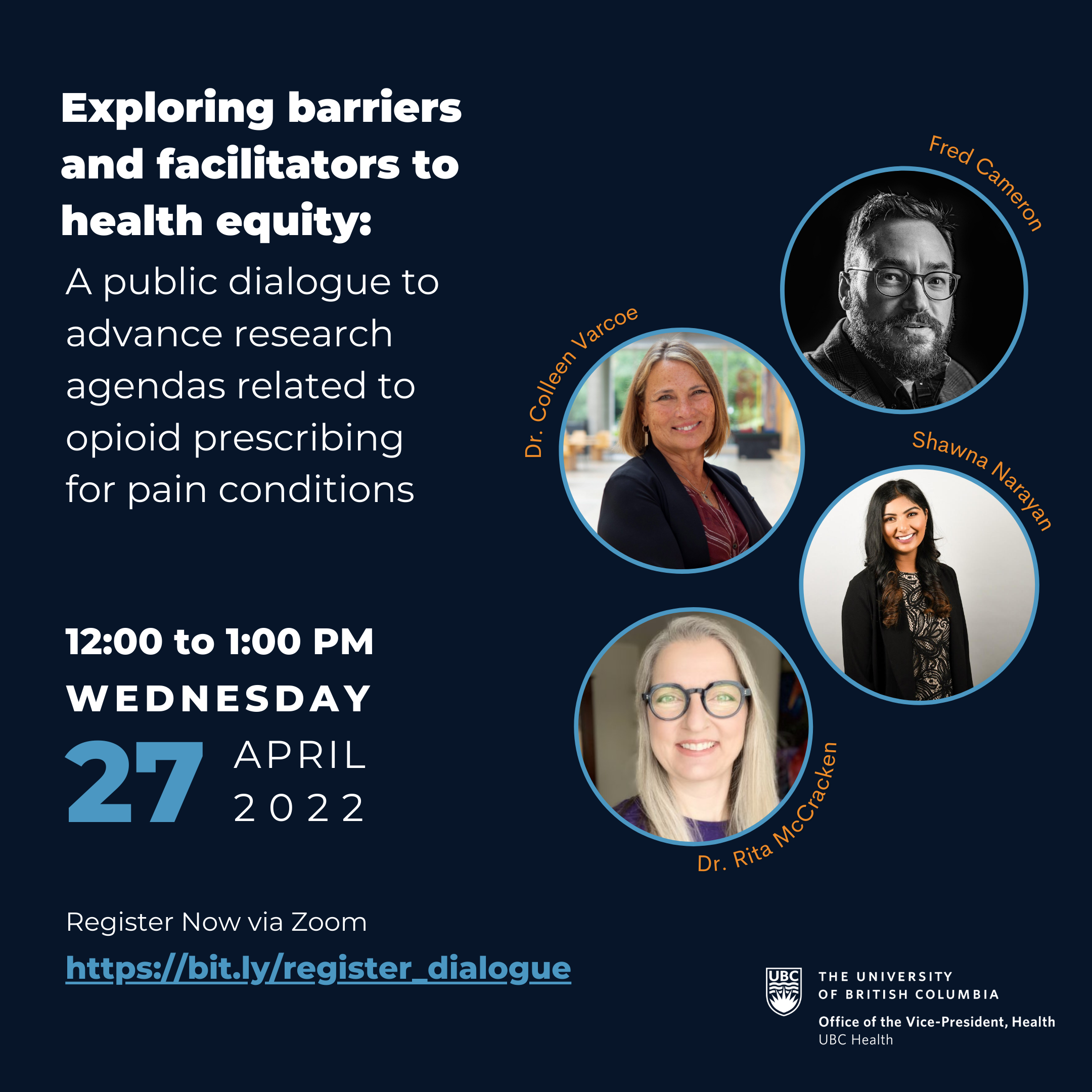
Exploring barriers and facilitators to health equity
[April 27] The ongoing opioid crisis continues to inflict serious harms on thousands of British Columbians. Some harms are due to initiation of opioid

Where science meets meditative solutions
Tired, overwhelmed, or stressed out? Worried about the future and what it may bring? Then join us for the Spring Session of an 8 week meditation

Framework for implementing physician education in substance use disorders
Education should be a window, not a wall. One would expect latest developments in research and science to move straight into practice, but it often

Improving opioid agonist care continuation, meta-analysis
Improving opioid agonist care continuation remains to be a challenge for many community based addiction treatment organizations. Research into
Individualized prescribing portraits to reduce inappropriate initiation of opioid analgesics to opioid naïve patients in primary care, REDONNA trial
REDONNA is a mixed-methods randomized study testing the effectiveness of individualized prescribing Portraits to reduce inappropriate initiation of

Maybe there were four training hours in total, study
There has been a noticeable deficiency in the implementation of addiction science in healthcare practice. Many physicians and healthcare providers

Educational studies: What can Medical Trainees learn in an Inner-City Hospital?
Gaps in addiction medicine training are a reason for poor substance use care in North America.